
I grew up with the idea that the size of my body was the most important thing in the world—and that my body was always too large.
When I look back at pictures, I see me at normal, chubby, and large—but at no time did I ever see myself as anything but too big and in need of a diet. Every bite I took was measured in self-worth and whether I could afford the calories, or deserved them.
The answer was always a resounding no.
When I received the ‘first pass corrections’ for Waisted (the layout that comes before the final printing) I looked at the first line— Everyone hates a fat woman— and remembered every time I felt those words.
I think I’ve been holding that first line as an opening to a novel since I began writing.
We’re a harsh country when it comes to issues around size—filled with both self-loathing and a Calvinist push towards walking off, dieting away, running from, and when all else fails, surgically sucking out unwanted fat.
Do men suffer as women do? I’m not sure—not when fat men on the screen can bed and wed the loveliest of women; film and television reversals are unlikely. I believe being fat is painful for men. I simply don’t think they’re as reviled; they need to climb far higher up the scale to merit as much hate as heavy women.
_______________________________________________________________________________________________________________________________________
In this provocative, wildly entertaining, and compelling novel, a group of women enrolled in an extreme weight loss documentary discovers self-love and sisterhood as they enact a daring revenge against the exploitative filmmaker’s owners.
Alice and Daphne, both successful working mothers, both accomplished and seemingly steady, harbor the same secret: obsession with their weight overshadows concerns about their children, husbands, work—and everything else of importance in their lives. Scales terrify them.
Daphne, plump in a family of model-thin women, learned only slimness earns admiration at her mother’s knee. Alice, break-up skinny when she met her husband, risks losing her marriage if she keeps gaining weight.
The two women meet at Privation. Located in a remote Vermont mansion, the program promises fast, dramatic weight loss, and Alice, Daphne, and five other women are desperate enough to leave behind their families for this once in a lifetime opportunity. The catch? They must agree to always be on camera; afterward, the world will see Waisted: The Documentary
__________________________________________________________________________________________________________________________________
I recently re-read (even re-bought, when I couldn’t find my copy) Food and Loathing by Betsy Lerner. From far too young, Lerner’s existence rested on her body size—real and perceived.
The book begins thusly:
“It is 1972. I am twelve years old. It is the first day of sixth grade, and I am standing in the girls’ gymnasium waiting to be weighed.”
If your flesh doesn’t crawl with those words, if you don’t want to either go running for a cream cheese smothered bagel, or conversely, vow to stop eating as of tomorrow, you may have grown up with a better sense of self-worth than Betsy or I.
The hatred of our flesh often has no bearing in reality. One of my best friends in the world begins each day pinching her flesh with callipered fingers and living for her daily-rationed cookie. She is tight and muscled and yet lives each day as though a sorcerer might drop fifty pounds on her at any moment.
Do I understand this?
I do.
I grew up with a thin mother who lived for leanness and beauty. My sister’s body mirrored hers. To the day she died at eighty, my mother would ask, “how’s your weight” each time we spoke, as though my ‘weight’ was a living-breathing entity separate from that which she liked about me.
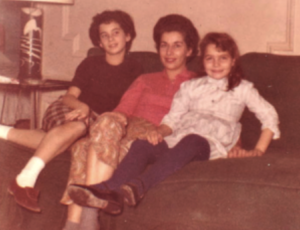
Trying to hold in the stomach my mother hated, I sloughed her words off with sarcasm and sighs; still my life was frozen in moments: My mother hiding cookies in a pot on the top of the cabinets. (I got exercise climbing up.) Swiping the icing from the middle of the Entenmann’s cake until the double layered thing became thinner and thinner (but not me.)
I remember the horror of looking for a dress for my cousin’s Bar Mitzvah as my mother rolled her eyes and complained to the saleswomen about her disgust at the lack of gowns into which I could zip. Last week I had to search for old family photos for an article. While doing so, I came across a picture of me at the Bar Mitzvah, wearing the gown.

Fourteen and thinking I was huge. I truly needed that champagne.
This was the ‘me’ that wanted to die from being so fat. I can’t believe I suffered as I did.
Of course, I found pictures where I was a bit plump. Truthfully, pictures where I am plain old fat. Even now it’s close to impossible to put them up. But I’ll put up a small collage here. And try to remember that I wasn’t deserving of loathing when I was fat. And yet I felt that I was–and by some, I truly was hated for the size of my body. Especially by myself. Despite being the same person.
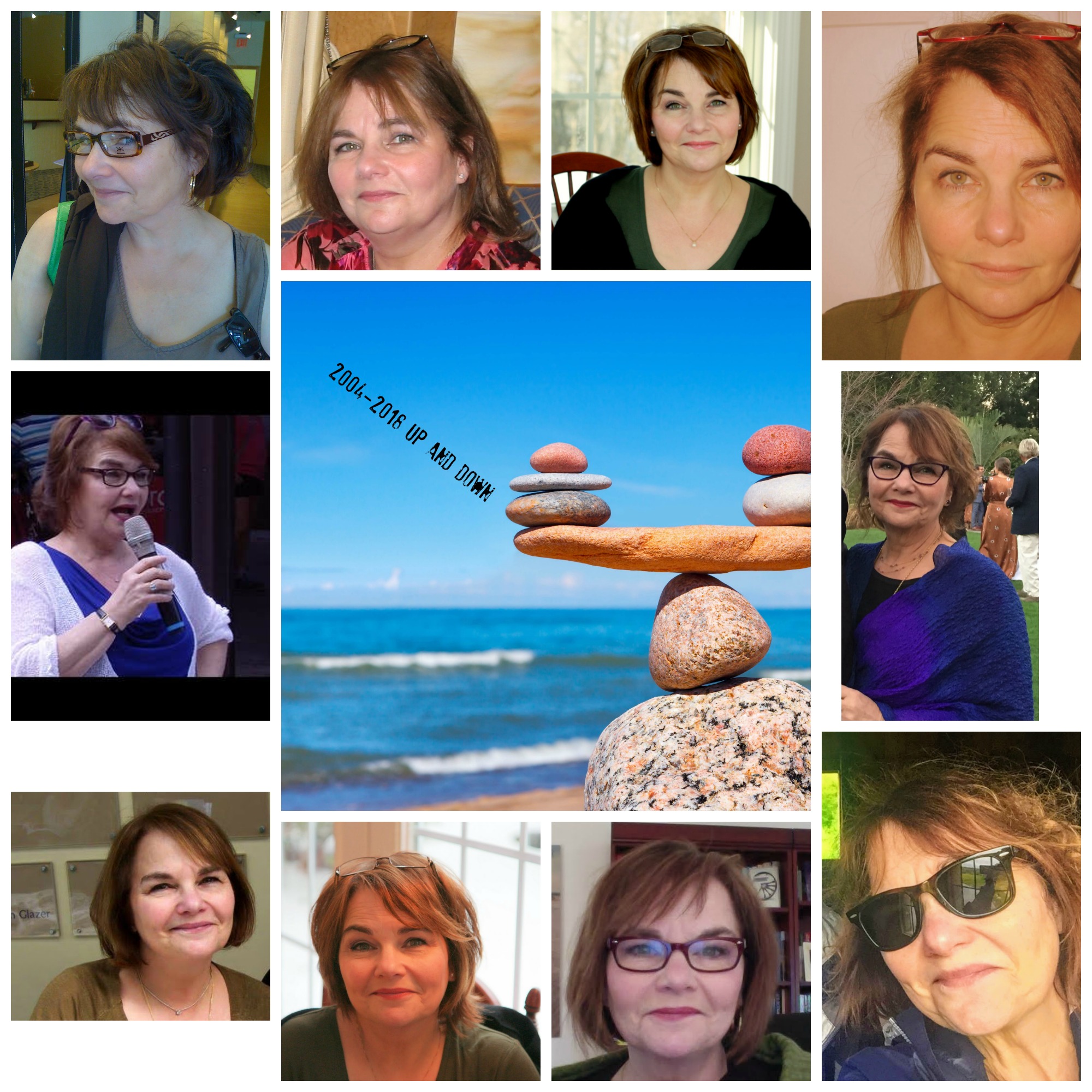
We’re hated, we hate ourselves, and we learn to sneak our food. I devoured cookies that I hid in the bathroom hamper.
The minute I put this collage up, I wanted to stuff cake in my mouth. I And none of these are me at my heaviest. I probably tore them all up.
Betsy Lerner joined Overeaters Anonymous in junior high, where she learned to divide food into forbidden and good. She became either a compulsive eater or a compulsive dieter, depending on the day, the month, and the moment. When binging, real life was always a day away. When dieting, she considered herself abstinent.
Food and Loathing is not a self-help book; it’s no guide for losing weight. Nor is it a companionable hug for staying heavy. It’s a mirror. It’s looking back, looking forward, or looking at who you are right this moment.
After finishing it, I thought (not for the first time, not for the last) about how much space I want to rent in my head to the mirror and to the scale. Right now, at this moment, this day, this week, this month, this minute, I am sorta okay, and that’s probably okay. I think that perhaps, sorta-okay is as good as it gets with acceptance for some of us.
When you grow up with hamper cookies and sighs, getting to sorta-okay when you look in the mirror can be a damned miracle.
